- LightSolver unveils Laser Processor Unit designed to solve physics equations at high speed
- Laser computing system uses optical memory to avoid processor and memory data bottlenecks
- Company begins offering early lab access with roadmap to one million variables by 2029
Laser-based computing is emerging as a potential challenger to established high-performance computing systems, with LightSolver revealing what it calls a Laser Processing Unit (LPU).
The Tel Aviv-based startup says its hardware can directly solve partial differential equations, a fundamental class of problems in physics and engineering.
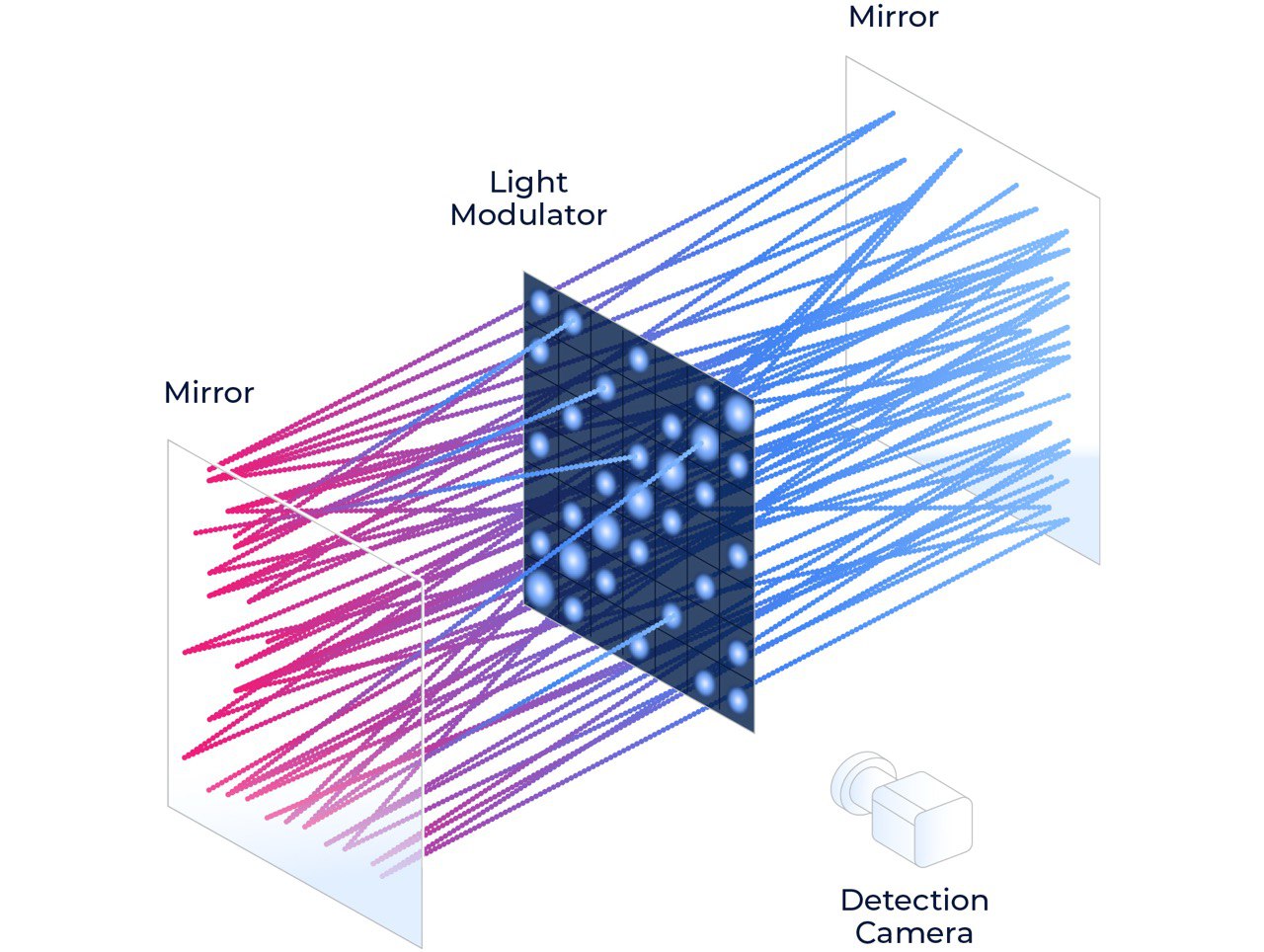
Unlike quantum systems or GPU clusters, the approach is based on a grid of lasers acting in unison.
Mapping equations onto the LPU
LightSolver says its hardware can map equations such as the heat equation (which models heat flow) and Schrödinger’s equation (a core equation in quantum mechanics) directly onto the LPU.
By using the natural properties of lasers as electromagnetic waves, LightSolver’s tech avoids many of the constraints found in digital systems.
This includes bottlenecks caused by data transfer between memory and processor.
According to LightSolver, the LPU operates with embedded optical memory. In practice, this means laser states are preserved inside the resonator, allowing each calculation step to build on the last without needing to move data externally.
The result is constant-time iteration measured in nanoseconds, independent of problem size.
While LightSolver compares its platform to both high-performance and quantum computers, it stresses that it is not built on photonic chips.
Today’s photonic processors are two dimensional, whereas its laser-based design is three dimensional, which the startup argues will allow greater scalability.
LightSolver has set a roadmap to reach 100,000 variables by 2027 and one million by 2029.
The company is already beginning to make its hardware available for testing. An Alpha version of its processor and a digital emulator are being offered to researchers through what it calls its LPU Lab.
LightSolver believes this step will help scientists and engineers experiment with the technology before it reaches commercial grade.
“Classical computers digitize analog nature, and we pay the price in longer run times and wasted energy. By running large-scale physics simulations on a physical machine, we can solve them more efficiently than any HPC or quantum system available today,” said Ruti Ben-Shlomi, CEO and co-founder of LightSolver.
Research papers have been published on the subject, and presentations have been given at computing conferences, including ACM Computing Frontiers 2025.
The company has also formed partnerships with simulation software providers and is working with HPC centers and national labs.